
Kyaka II Refugee Settlement, Uganda | November 2026
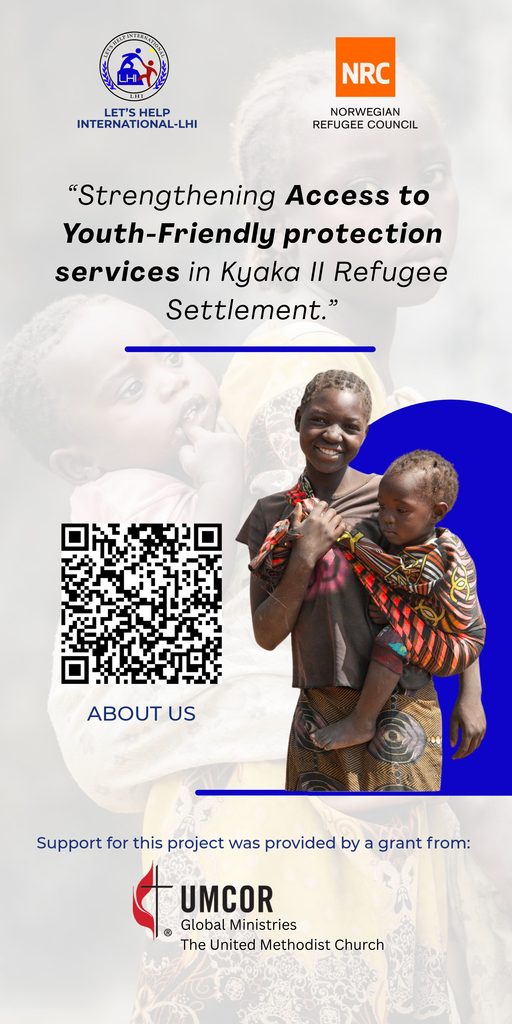
Let’s Help International (LHI) is proud to announce its selection by the Norwegian Refugee Council (NRC) as one of the Refugee and Youth-Led Organisations (RYLOs) to implement a project titled “Strengthening Access to Youth-Friendly Protection Services in Kyaka II Refugee Settlement.”
Supported by the United Methodist Committee on Relief (UMCOR) through NRC’s Flexible Mini Grants (FMG) and Capacity Development initiative, LHI has secured a grant of US$6,000 (UGX 21,900,000) to implement this initiative between October 2026 and June 2027.
This achievement represents an important milestone for LHI and recognition of its growing contribution to refugee-led and youth-led humanitarian action. More importantly, it creates an opportunity to address protection challenges affecting young people in Kyaka II through locally led solutions, meaningful participation, information sharing, skills development, referrals, and advocacy.
A competitive opportunity recognising refugee and youth leadership
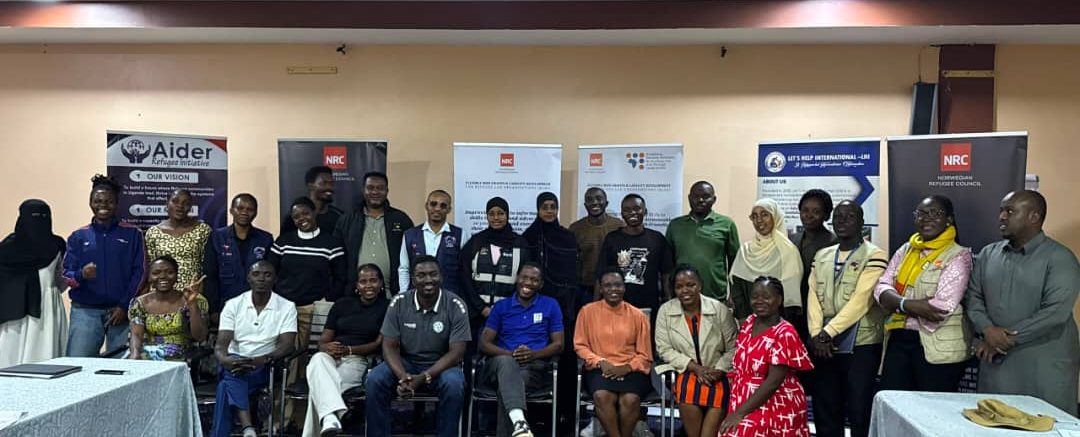
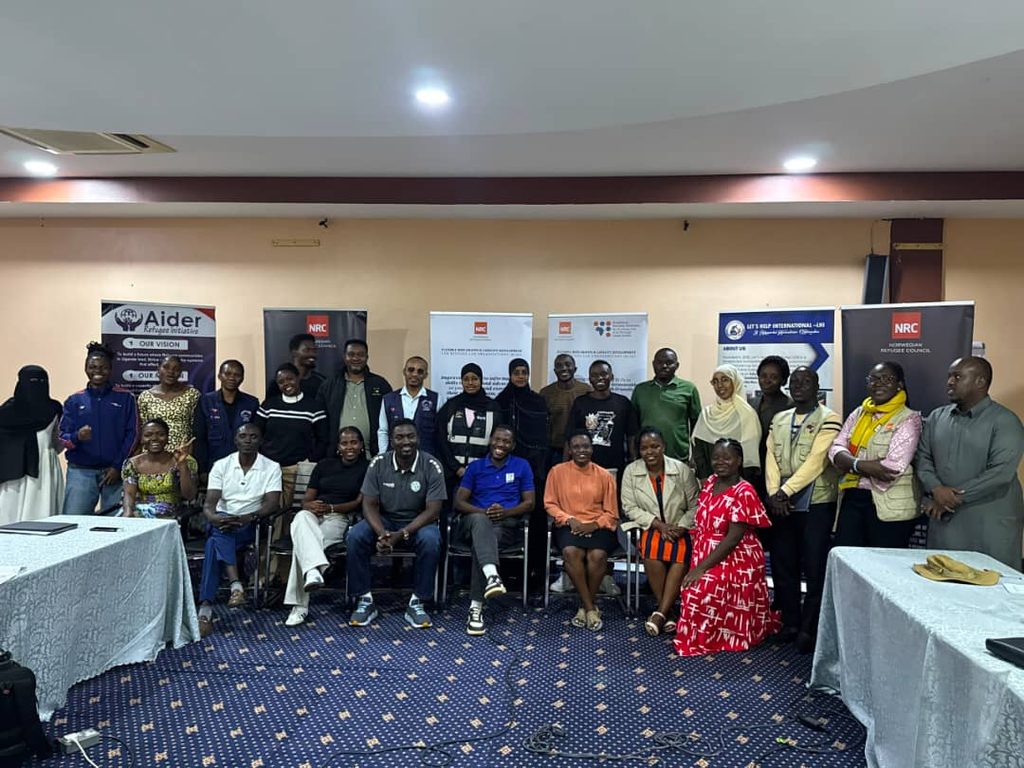
LHI’s selection came through a competitive process in which NRC selected five Refugee and Youth-Led Organisations to receive support under the initiative. Three of the selected organisations are based in Kyaka II Refugee Settlement: Let’s Help International (LHI), YIDA, and ANG. The other two organisations are based in Kampala: Soccer Without Borders and AIDER.
Being among the selected organisations is particularly significant because the opportunity recognises the potential, capacity, and leadership of refugee and youth-led organisations to contribute to humanitarian responses and address challenges within their own communities.
For LHI, this partnership goes beyond receiving financial support. It is an opportunity to demonstrate that young refugee leaders and locally established organisations can design and implement meaningful protection interventions, manage resources responsibly, generate evidence, and engage decision-makers to improve services.
On 19 October 2026, LHI officially signed a Memorandum of Understanding with NRC, formalising the partnership. Following the submission of the required supporting documents and completion of initial project preparations, LHI received the first tranche of funding, representing 75% of the total grant, on 28 October 2026.
Why this project? Addressing protection challenges affecting young people
Young people are an important part of Kyaka II Refugee Settlement’s social, economic, and community development. However, many continue to face challenges in accessing reliable protection information, understanding their rights, identifying available support services, and knowing where and how to seek assistance when confronted with protection concerns.
These challenges are particularly important for vulnerable groups, including young mothers, unemployed youth, and young people with disabilities. Issues such as gender-based violence (GBV), discrimination, child protection concerns, sexual and reproductive health (SRH), safeguarding, and digital violence require accessible information, appropriate support, and reliable referral pathways.
The growing use of digital platforms also creates new protection concerns, including online harassment, privacy violations, unsafe internet use, and digital gender-based violence.
LHI therefore developed this project to bring protection information closer to young people, strengthen their knowledge and practical skills, connect vulnerable individuals to appropriate services, and amplify youth voices in community and humanitarian decision-making.
Reaching 1,000 people through direct engagement and community outreach
Through this project, LHI aims to reach 1,000 people, comprising 400 direct beneficiaries and 600 indirect beneficiaries.
The project will prioritise young people, particularly vulnerable youth, while also engaging community leaders, youth focal persons, service providers, and other relevant stakeholders.
The targeted participant composition is approximately 70% refugees and 30% nationals, with 60% female and 40% male participation. LHI will also record disability status to promote inclusive programming and ensure the needs of young people with disabilities are considered.
Implementation will focus on three zones within Kyaka II Refugee Settlement:
- Buliti Zone
- Bwiriza Zone
- Byabakora Zone
Four objectives driving the project
Rather than treating protection as a single intervention, LHI has designed the project around four interconnected objectives:
1. Strengthening protection and access to services
LHI will work with 13 local leaders, including 10 RWC I and three LC I representatives, to identify and mobilise 50 vulnerable young people. Through three community dialogues engaging 80 youth, the organisation will raise awareness of youth rights, GBV prevention, child protection, SRH, safeguarding, discrimination, and available referral pathways. At least four young people are targeted for referral to psychosocial support services.
2. Building youth skills, knowledge, and agency
The project will train 50 young people in digital and cyber safety, covering online privacy, harassment, digital GBV, and responsible internet use. Another 50 youth focal persons from 36 RLOs and 14 RWCs will receive training in protection identification and safe referrals. Additionally, 50 young mothers will be engaged in SRH counselling activities, connecting them with relevant health and psychosocial support services.
3. Amplifying youth voices and promoting advocacy
LHI will mobilise the 16 Days of Activism Against Gender-Based Violence campaign across nine zones, using community outreach, digital platforms, churches, and community radio. The organisation will also facilitate youth-led debates and develop a position paper on the state of service delivery in Kyaka II. Through engagement with OPM, UNHCR, NRC, and local leaders, the project aims to influence five decision-makers and secure commitments towards improving youth-friendly protection services.
4. Ensuring accountability, learning, and quality implementation
LHI will use JotForm to monitor activities and outcomes, conduct baseline and endline assessments, and document progress. The project will produce nine success stories or case studies, two short videos, and a photo library. Regular reporting, coordination meetings, quarterly reviews, and an endline reflection meeting will support accountability, learning, and continuous improvement.
A partnership investing in refugee and youth-led solutions
The project is funded by the United Methodist Committee on Relief (UMCOR) through NRC’s Flexible Mini Grants and Capacity Development initiative.
For LHI, this partnership demonstrates the importance of investing in organisations that are rooted in the communities they serve and understand the realities facing displaced young people.
As a refugee-led organisation operating in Kyaka II, LHI brings valuable community experience, local knowledge, and relationships with young people, refugee leaders, and other stakeholders.
Before implementation, LHI participated in a capacity-building workshop from 23–25 September 2026, working with NRC’s Partnership Manager to develop its project canvas, work plan, budget, and grant tracking tools. The process also covered financial management, MEAL, safe and inclusive programming, and other essential areas of project management.
Following the signing of the partnership MoU, LHI conducted internal planning meetings and staff training on Youth Rights and its PSEAH Policy.
These preparations establish an important foundation for responsible project delivery and the protection of the young people the organisation serves.
Looking ahead: Young people at the centre of protection and change
As implementation progresses towards June 2027, LHI looks forward to working closely with young people, local leaders, youth-led organisations, service providers, and humanitarian stakeholders.
The organisation believes that young people should not only receive protection services but also understand their rights, participate in decisions affecting their lives, and have opportunities to influence the services available to their communities.
This milestone is not only about securing a grant. It is about recognising the leadership of young people, investing in refugee-led solutions, and creating opportunities for communities to participate in shaping the protection services they need.
With the support of UMCOR and in partnership with NRC, Let’s Help International remains committed to making youth protection a shared responsibility and ensuring that young people’s voices are heard, their rights are respected, and their contributions are recognised.
Funding and partnership acknowledgement
This project is funded by the United Methodist Committee on Relief (UMCOR), with a grant of US$6,000 (UGX 21,900,000), and implemented by Let’s Help International (LHI), with the Norwegian Refugee Council (NRC) providing partnership coordination and capacity development support.
Suggested website tags: #LetsHelpInternational #UMCOR #NRC #RYLOs #YouthProtection #RefugeeLedOrganisations #YouthLeadership #KyakaII #YouthEmpowerment